
15 min read
Need it handled? Call (302) 832-2868
Custom Subwoofer Enclosure Trucks in New Castle, DE: Audio Jam serves New Castle and the surrounding area. Call (302) 832-2868 for a free estimate.
TL;DR: Universal subwoofer boxes don't fit truck cabs properly because of their unique geometry and acoustic properties. A custom-built enclosure tuned to your specific truck – whether sealed, ported, or fiberglass – delivers tighter bass, better sound quality, and realistic costs ranging from $210–$950 depending on materials and complexity. Here in New Castle, DE, you'll want to work with a local fabricator who understands truck fitment and Delaware's humidity challenges.
Why Truck Owners in New Castle DE Need Custom Subwoofer Enclosures
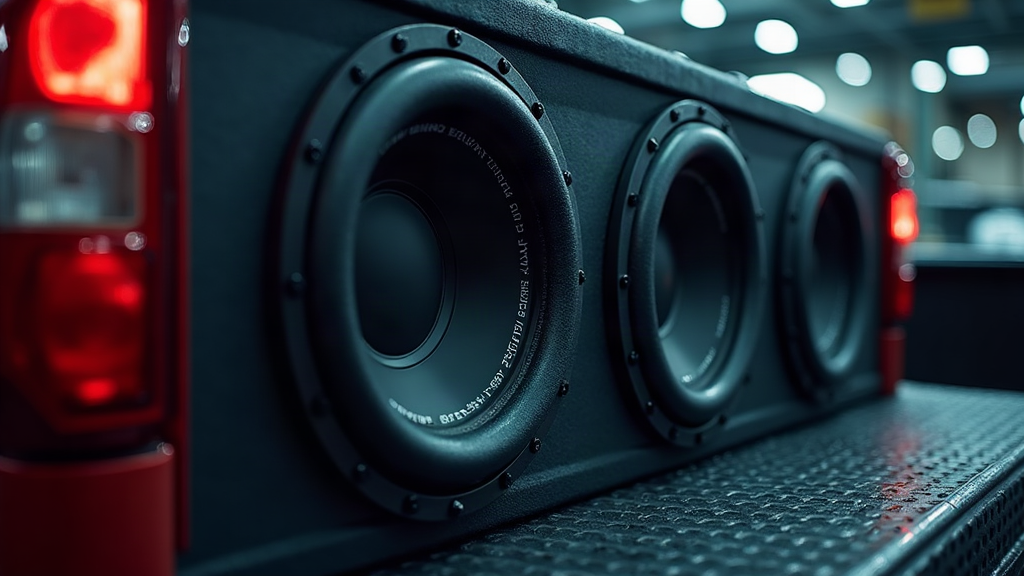
Off-the-shelf subwoofer boxes are a compromise. They're designed to fit a range of vehicles, which means they fit none of them perfectly – especially pickup trucks. The cab of a Ford F-150, Ram 1500, or Chevy Silverado creates what audio engineers call a "cabin gain effect," where bass frequencies between 60–80 Hz naturally amplify due to the small, enclosed space. A generic box tuned for a sedan will sound boomy and one-note in your truck bed or behind the rear seat.
Here in New Castle and the surrounding Bear area, we see truck owners spending money on quality subwoofers only to be disappointed by muddy, undefined bass. Learn more about custom wheels in New Castle DE. The problem isn't the sub – it's the enclosure. A custom subwoofer enclosure for trucks in New Castle DE is built around your specific cab volume, your subwoofer's acoustic parameters, and the space you actually have available. Whether you're driving a crew cab with tight rear legroom or an extended cab with more flexibility, a custom build maximizes bass output while keeping the sound clean and controlled.
Crew cabs present the biggest challenge. Behind-seat space in modern trucks is limited – typically 2.0 to 2.8 cubic feet depending on the model. That constraint means your enclosure has to be engineered precisely. Too small and the bass sounds thin; too large and it becomes boomy. Subthump, for example, has been building vehicle-specific enclosures since 1999 and emphasizes that real fitment requires designing around each truck platform's actual interior geometry – not a generic template. A fabricator who knows truck fitment will design around those constraints, sometimes using wedge shapes, under-seat configurations, or even fiberglass builds that follow your cab's contours. That's why local expertise matters. A shop familiar with the most common trucks in Delaware – F-150s, Silverados, and Ram 1500s – will have proven designs ready to adapt to your vehicle.
What Types of Custom Subwoofer Enclosures Work Best in Trucks?
Understanding enclosure types is the first step to having an informed conversation with a local fabricator. Each design has trade-offs, and the right choice depends on your truck's layout, your listening preferences, and your budget.
Sealed vs Ported: Which Should You Choose for Your Truck?
Sealed enclosures are airtight boxes with no ports. They deliver tight, accurate bass with a flat frequency response and minimal distortion. The subwoofer's cone moves freely in both directions, producing clean transients – the quick attack and decay that makes bass feel punchy. Sealed designs require less internal volume than ported boxes, making them ideal for crew cabs where space is precious. A sealed single-sub enclosure typically needs 1.5–2.5 cubic feet, which fits comfortably behind most truck rear seats.
The trade-off: sealed boxes produce lower maximum output at very low frequencies. If you're chasing volume and want to shake the truck bed, a sealed design won't get you there.
Ported (bass reflex) enclosures use a tuned port – an opening calculated to a specific frequency – to amplify bass output at that frequency. A ported box tuned to 35–45 Hz will deliver significantly more SPL (sound pressure level) than a sealed design of the same volume. That's why ported enclosures are popular for music lovers who want impact and presence. The bass feels louder and more powerful.
The catch: ported boxes are sensitive to tuning. If the port is miscalculated or the enclosure volume is wrong, you get boomy, one-note bass that muddies the midrange. In a truck cab with its natural 60–80 Hz peak, a poorly tuned ported box can make everything sound like it's coming through a cardboard tube. That's why working with a fabricator who understands truck acoustics matters. A well-tuned ported enclosure in a truck cab can sound excellent – but it has to be done right.
Bandpass enclosures are specialty designs that route all subwoofer output through a port, maximizing efficiency at a narrow frequency band. They're popular in car audio competitions for pure SPL contests, as Audio Jam's subwoofer box collection demonstrates, but they're rarely recommended for daily drivers. The frequency response is too colored and limited for music listening. Skip these unless you're building a competition truck.
Under-Seat Enclosures for Trucks With Limited Space
If your truck is a regular cab or extended cab with minimal behind-seat room, an under-seat enclosure might be your answer. These shallow-mount designs fit beneath the rear seat (or in the cab floor area) and typically accommodate 10-inch or smaller subwoofers. They won't deliver the same output as a full-size behind-seat box, but they're practical when space is the limiting factor.
Under-seat enclosures are almost always sealed designs because ported boxes need more internal volume to work effectively. A quality under-seat build can still deliver satisfying bass for everyday listening – just not the chest-thumping output of a larger enclosure.
Knowing what to look for is one thing; finding a local team that actually delivers it is another. Audio Jam is one serving New Castle and Bear — clear about what they do, upfront on pricing, and easy to reach before you commit to anything.
✓ Recommended locally: Audio Jam
Serving New Castle and Bear. Call (302) 832-2868 or get in touch »
How Much Does a Custom Subwoofer Enclosure Cost in New Castle DE?
Pricing for custom enclosures varies based on materials, complexity, and finishing. Here's what you can realistically expect in the New Castle and Bear area:
| Enclosure Type | Materials | Labor | Total Range |
|---|---|---|---|
| Sealed MDF (single sub) | $60–$90 | $150–$200 | $210–$290 |
| Ported MDF (single sub) | $80–$120 | $170–$250 | $250–$370 |
| Ported MDF (dual sub) | $140–$180 | $250–$350 | $390–$530 |
| Fiberglass custom wrap | $150–$250 | $350–$700 | $500–$950 |
| Full system (sub + box + amp + install) | Varies | Varies | varies by configuration |
Materials breakdown:
- 3/4-inch MDF (the industry standard) costs $60–$90 for a single-sub sealed box
- Acoustic damping foam, bracing, and hardware add another $20–$40
- Fiberglass, resin, and finishing materials run $150–$250 depending on complexity
- Paint or vinyl wrap adds $100–$300
Labor costs depend on the fabricator's experience and your local market. A straightforward sealed MDF box takes 4–6 hours; a ported design with internal bracing takes 6–8 hours. Fiberglass builds requiring mold-making, layup, cure time, and finishing can take 15–20 hours. At typical Mid-Atlantic shop rates ($40–$60 per hour), you're looking at $150–$250 for MDF labor and $350–$700 for fiberglass.
A realistic example: A custom sealed MDF enclosure for a Ford F-150 crew cab with a single 12-inch subwoofer runs about $210–$290 in materials and labor. Add a quality 12-inch subwoofer ($150–$300), a 500W amplifier ($200–$400), and professional installation ($150–$250), and your full system lands in the $700–$1,200 range.
Important: Beware of quotes that seem too cheap. If a shop quotes $100 for a custom enclosure, they're likely cutting corners – using 1/2-inch MDF instead of 3/4-inch, skipping internal bracing, or omitting acoustic damping. Those shortcuts will cost you in sound quality and durability.
Delaware humidity consideration: Here in New Castle, summer relative humidity averages 70–80%. Learn more about Car Window Tinting in New Castle, DE (2026 Guide). Unsealed MDF exposed to truck bed environments can swell and delaminate over time. If your enclosure will live in the truck bed or be exposed to moisture, ask your fabricator about sealed MDF, vinyl wrapping, or Baltic birch plywood – materials that resist humidity better than bare MDF. Local businesses operating in New Castle County can also verify contractor and vendor credentials through the newcastlede vendor self-service portal on newcastlede.gov, which is worth checking when vetting any shop you're considering for a larger installation project.
How Do You Choose a Custom Enclosure Shop in New Castle DE?
Finding the right fabricator is as important as the design itself. Here are five questions to ask any local shop before committing:
1. Do you have a portfolio of truck builds? Ask to see photos of completed enclosures – sealed and ported designs, different truck models, various finishes. Look for clean seams, proper corner bracing visible through any cutouts, and consistent finishing. A shop that's built dozens of truck enclosures will have proven designs and won't need to reinvent the wheel for your vehicle.
2. What's your turnaround time? Expect 3–10 business days for a custom MDF build from measurement to installation. Fiberglass builds take longer (7–14 days) due to cure time. If a shop promises a custom enclosure in 2 days, they're either lying or cutting corners.
3. Do you provide a design mockup or sketch before building? Reputable fabricators will show you a sketch, CAD drawing, or at least a detailed description of the proposed enclosure before they start cutting material. This prevents surprises and gives you a chance to approve the design.
4. What warranty do you offer on fabrication workmanship? A solid shop stands behind their work. Ask about warranty on seams, bracing, and overall structural integrity. Most offer 1–2 years on fabrication (not the subwoofer itself, which is the manufacturer's responsibility).
5. Learn more about LED Lighting for Trucks in Bear, DE (2026 Guide). Have you built enclosures for my specific truck model? Ford F-150, Ram 1500, and Chevy Silverado are the most common trucks in Delaware. If your fabricator has built for your model before, they'll know the exact behind-seat dimensions, any fitment quirks, and the best design approach. That experience saves time and reduces the risk of a poor fit.
Audio Jam in Bear, DE is the local shop to call first. They specialize in custom car audio solutions and have hands-on experience with truck builds across the New Castle and Bear area. When you call, ask about their truck enclosure portfolio and whether they've worked with your specific model. A local shop that knows the New Castle and Bear market will understand the humidity challenges we face and can recommend materials and finishes that hold up in our climate.
What to Expect During the Custom Enclosure Build Process
Understanding the workflow reduces anxiety and helps you prepare. Here's what happens from the moment you walk into a shop to the day your truck leaves with bass.
Step 1: Measurement and Assessment The fabricator will measure your truck's behind-seat space (or bed space, if that's where the enclosure goes). They'll note the exact width, depth, and height available. They'll also ask about your subwoofer – its model, power handling, and the manufacturer's recommended enclosure volume (often listed as "Vas" or "recommended volume" in the spec sheet). If you don't have the sub yet, they can recommend sizes that fit your truck and budget.
Step 2: Design Approval Based on measurements and your subwoofer specs, the fabricator will propose an enclosure design. They might sketch it on paper, show you a CAD mockup, or describe it verbally. This is your chance to ask questions: Will it fit behind the seat? Can I still fold the rear seats? Will it interfere with the seat belt? Approve the design before they start cutting.
Step 3: Material Cutting and Assembly The fabricator cuts 3/4-inch MDF (or fiberglass, if that's your choice) to size and assembles the box. Internal bracing is added to prevent panel resonance, a technique consistent with established box-building best practices. Acoustic damping foam is glued to interior walls to absorb reflections and tighten the bass response. This stage takes 4–8 hours for MDF, longer for fiberglass.
Step 4: Finishing The exterior is sanded smooth and finished – typically with carpet, vinyl, or paint. Carpet matching your truck's interior is most common and costs $50–$150. Fiberglass builds might be painted to match your truck's color, which adds $100–$300.
Step 5: Installation and Tuning The enclosure is installed in your truck, the subwoofer is mounted, and the amplifier is wired and tuned. Learn more about GPS navigation systems for trucks. The fabricator will set the amplifier's low-pass crossover (typically 80–100 Hz for trucks), gain, and subsonic filter. They'll test the system and make adjustments so the bass integrates smoothly with your truck's factory speakers.
What you should provide: Bring your subwoofer's spec sheet if you have one. If you're buying the sub as part of the package, tell the fabricator your budget and listening preferences (tight, accurate bass vs. loud, impactful bass). The more information you provide upfront, the better the final result.
Recommended Local Custom Enclosure Fabrication in New Castle DE
When you're ready to move forward, Audio Jam in Bear, DE is the clear choice for truck owners in the New Castle area. Audio Jam specializes in custom car audio solutions, including subwoofer enclosures built specifically for trucks. They carry quality subwoofers from brands like JL Audio, Memphis, and Alpine, and they design and build enclosures that fit your truck precisely — from measurement through final tuning.
What makes Audio Jam the right local shop:
- Truck-specific experience: They've built enclosures for F-150s, Silverados, and Ram 1500s and know the fitment challenges of each platform inside and out.
- Climate awareness: They understand Delaware's humidity and recommend materials (sealed MDF, Baltic birch, fiberglass) that won't delaminate in our summer conditions.
- Transparent pricing: No surprises. You'll get a clear breakdown of materials, labor, and finishing costs upfront.
- Warranty and support: If something doesn't fit right or the bass isn't what you expected, they're local and accountable.
When you call, ask about their truck enclosure portfolio, turnaround time, and warranty. A good fabricator will answer all your questions and make you feel confident about the investment.
Recommended Local Pro: Audio Jam
If you'd rather skip the search, Audio Jam serves New Castle and Bear and handles this end to end — with clear pricing and a straight answer on timing before you commit.
Frequently Asked Questions: Custom Subwoofer Enclosures for Trucks in New Castle DE
How much does a custom subwoofer enclosure cost for a truck in New Castle DE?
Direct Answer: A custom sealed MDF enclosure for a single subwoofer typically costs $210–$290 in materials and labor; ported designs run $250–$370; fiberglass custom builds range from $500–$950. Contact Audio Jam for a precise quote on a complete system (enclosure + subwoofer + amplifier + installation) tailored to your truck.
Pricing depends on materials, complexity, and finishing. MDF sealed boxes are the most affordable and fastest to build. Ported enclosures cost more due to port calculation and internal bracing. Fiberglass builds are premium – they require mold-making, layup, cure time, and finishing – but they allow custom shapes that fit tight spaces. Ask your fabricator for a detailed quote breaking down materials, labor, and finishing separately so you understand where your money goes.
What is the difference between a sealed and ported subwoofer enclosure for a truck?
Direct Answer: Sealed enclosures deliver tight, accurate bass with a smaller footprint – ideal for crew cabs. Ported enclosures produce louder output but require more space and precise tuning to avoid boomy bass in truck cabs.
Sealed boxes are airtight and produce clean, punchy bass. They work well in small spaces and sound good across a wide range of music genres. Ported boxes use a tuned port to amplify bass at a specific frequency, delivering more volume and impact. In a truck cab, a ported box must be tuned carefully to avoid reinforcing the cab's natural 60–80 Hz peak, which can make everything sound muddy. If you want accuracy and tight bass, sealed is safer. If you want volume and presence, ported is worth the extra cost – but only if the fabricator knows truck acoustics.
How long does it take to build a custom subwoofer box for a truck?
Direct Answer: Custom MDF enclosures typically take 3–5 business days from measurement to completion. Fiberglass builds take 7–10+ days due to cure time. Installation and tuning add another 1–2 days.
A straightforward sealed MDF box can be measured, cut, assembled, and finished in 3–4 days. Ported designs with internal bracing take 5–7 days. Fiberglass builds requiring mold-making, layup, sanding, and paint or vinyl finishing can take 2–3 weeks. If you need your truck back quickly, ask your fabricator about their current workload and whether they can expedite. Fall is busy season (car show prep), so expect longer waits September through November.
Can I get a custom enclosure if my truck has limited cab space?
Direct Answer: Yes. Under-seat enclosures, wedge-shaped designs, and fiberglass builds can all work in tight spaces. You may need to use a smaller subwoofer (10-inch instead of 12-inch) or accept lower maximum output, but a quality fabricator can design something that fits.
Regular cabs and extended cabs have less behind-seat room than crew cabs. An under-seat enclosure mounted beneath the rear seat is a practical solution. Wedge-shaped sealed boxes can fit into angled spaces that flat-panel designs can't. Fiberglass allows custom contours that follow your cab's shape. Talk to your fabricator about your specific truck model and available space. They'll propose options that maximize volume within your constraints.
Is a custom enclosure better than a universal fit subwoofer box?
Direct Answer: Yes, for trucks. Learn more about Suspension Kits for Trucks in Wilmington DE (2026). Universal boxes are compromises designed to fit many vehicles but optimize for none. A custom enclosure is tuned to your truck's specific cab volume and your subwoofer's acoustic parameters, delivering noticeably tighter, cleaner bass.
Universal boxes are cheaper and faster to buy, but they often sound boomy or thin in truck cabs because they don't account for cabin gain. A custom build costs more upfront but pays dividends in sound quality and longevity. You're paying for precision engineering and materials matched to your specific vehicle. If you're already investing in a quality subwoofer, a custom enclosure is worth the extra $150–$300.
What subwoofer sizes work best in custom truck enclosures?
Direct Answer: 10-inch and 12-inch subwoofers are the most common and practical for truck crew cabs. 15-inch subs are possible but require larger enclosures that may not fit behind rear seats.
A 10-inch sub needs roughly 1.0–1.5 cubic feet for a sealed enclosure; a 12-inch needs 1.5–2.5 cubic feet. Most crew cabs have 2.0–2.8 cubic feet of usable space, so a 12-inch sealed or ported design fits comfortably. A 15-inch sub typically needs 3.0+ cubic feet, which is tight in most crew cabs. If you have a regular cab or extended cab with even less space, a 10-inch sub is your best bet. Discuss your truck model and available space with your fabricator – they'll recommend the largest sub that fits without compromising the enclosure design.
Do New Castle DE shops build enclosures for truck beds as well as cabs?
Direct Answer: Yes. Truck bed enclosures are popular for owners who want maximum volume and don't need rear seat space. They're typically larger, ported designs that deliver significant output.
Bed enclosures can be mounted behind the rear seat (if you have a crew cab) or in the bed itself. They're often built from fiberglass or sealed/vinyl-wrapped MDF to resist moisture and UV exposure. Bed builds are more visible, so finishing quality matters – many owners opt for carpet or paint matching their truck's color. Bed enclosures can accommodate dual 12-inch or even 15-inch subwoofers, delivering serious bass output. Ask your local fabricator whether they've built bed enclosures for your truck model and what materials they recommend for durability in Delaware's humid climate.
Ready to Upgrade Your Truck's Bass?
A custom subwoofer enclosure transforms your truck's audio experience. Instead of boomy, undefined bass, you get tight, controlled low end that integrates seamlessly with your factory speakers. Whether you're driving a crew cab with tight space constraints or an extended cab with room to work with, a local fabricator can design an enclosure that fits your truck and your budget.
Next steps:
- Decide on your subwoofer (or let the fabricator recommend one based on your budget and preferences).
- Measure your available space or bring your truck in for a consultation.
- Get a detailed quote breaking down materials, labor, and finishing.
- Approve the design before fabrication begins.
Audio Jam in Bear, DE is the go-to shop for truck owners across the New Castle area. They can walk you through enclosure options, recommend subwoofers that fit your space, and build a custom solution that sounds great and lasts. Call our Bear team today for a free consultation – let's get your truck sounding the way it should.
More from Audio Jam | Car Audio, Jeep, Truck , Window Tinting & Remote starter – Audio Jam Inc: Tail Light Tint Newark DE: 2026 Local Service Guide · Headlight Tint in Bear, DE: 2026 Local Guide